TORSTEN SLAMA
at the Neue Essener Kunstverein
February 28, 2026 - May 24, 2026
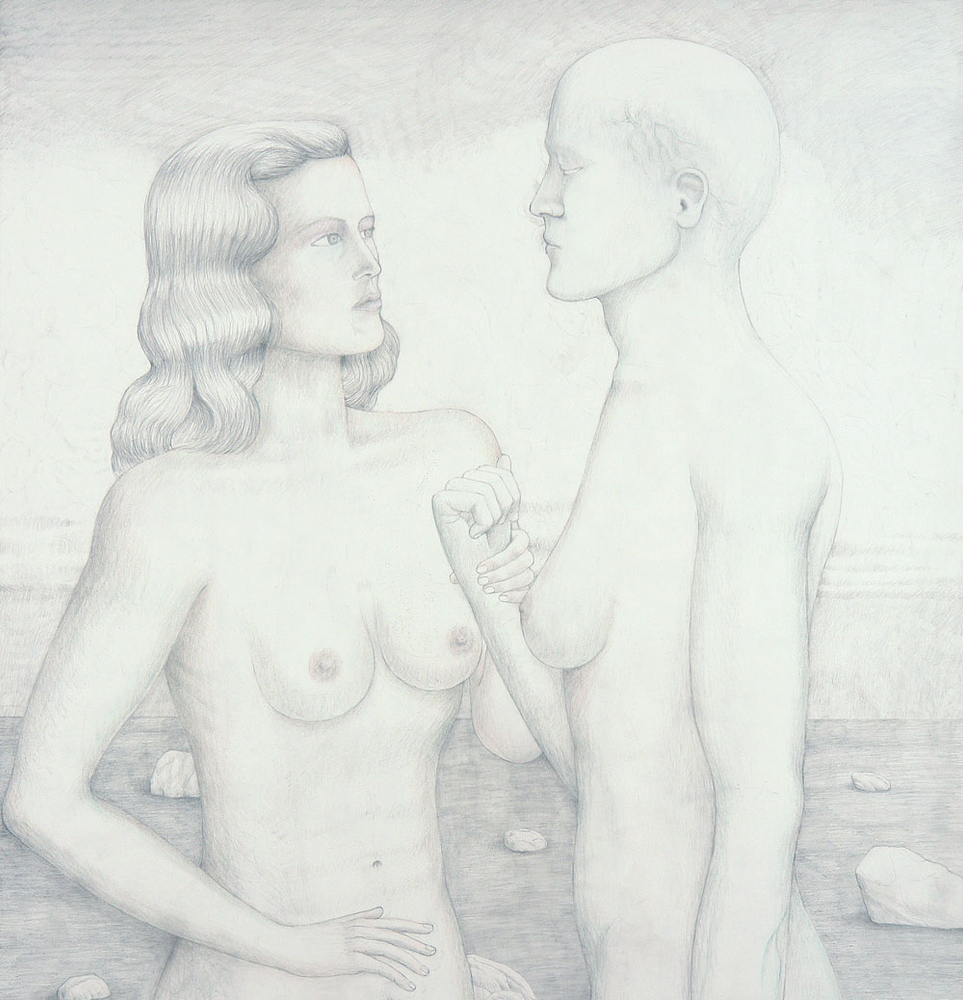
Torsten Slama's oeuvre of drawings and paintings, characterized by a strong graphic style, is marked by a symbolically overloaded understanding of images that has remained consistent over thirty years and gained depth through subtle developments. After working extensively with the human figure for many years, his works from 2010 onwards mostly feature buildings, machines, or trains, each embedded in highly artificial landscapes, through which he indirectly monologues about the abysses of human existence in times of hypermodernity. Slama increasingly developed his own artistic grammar, the idiosyncrasies of which would have been difficult to discern from individual works had the artist not kept written commentary throughout his life. Despite this brooding, solitary aesthetic, Slama nonetheless fits very precisely into the playful utopian mindset cultivated by the second wave of artists from the proverbial “Cologne of the 1990s.”
The exhibition at the Kunstverein, “Die Vatermaschine” (The Father Machine), attempts to trace the artist's complex semantic chains across various series with a cross-section of his oeuvre from 2007 onwards. Not least because Slama's indirect commentary on social developments, disguised as a retreat, offers a subtle alternative to the currently dominant political aesthetics. Moreover, the works embody a sumptuous concept of beauty that requires courage in this form and rarely appears in such a thoughtful way in contemporary programs.
“Die Vatermaschine” is Slama's first solo exhibition since his untimely death in 2023.